

A few months ago, we discussed how something as simple as laptops and mobile internet could dramatically reduce the time social workers spend filling out paperwork in offices.
Technology doesn’t always need to be revolutionary to improve people’s lives. Sometimes small adjustments remove large burdens.
But there is another problem quietly affecting millions of people today.
Sitting.
Office workers, drivers, programmers, call center agents, and many people with limited mobility spend most of their day in a chair.
And the human body was never designed for that.
After hours of sitting, the body slowly begins to complain:
• lower back pain
• stiff muscles
• poor circulation
• fatigue
• reduced concentration
Many people know this problem very well. The advice they hear most often is simple:
“Take breaks and move more.”
But in reality, many jobs simply don’t allow that. Deadlines, calls, meetings, and long tasks keep people seated for hours.
So the question becomes:
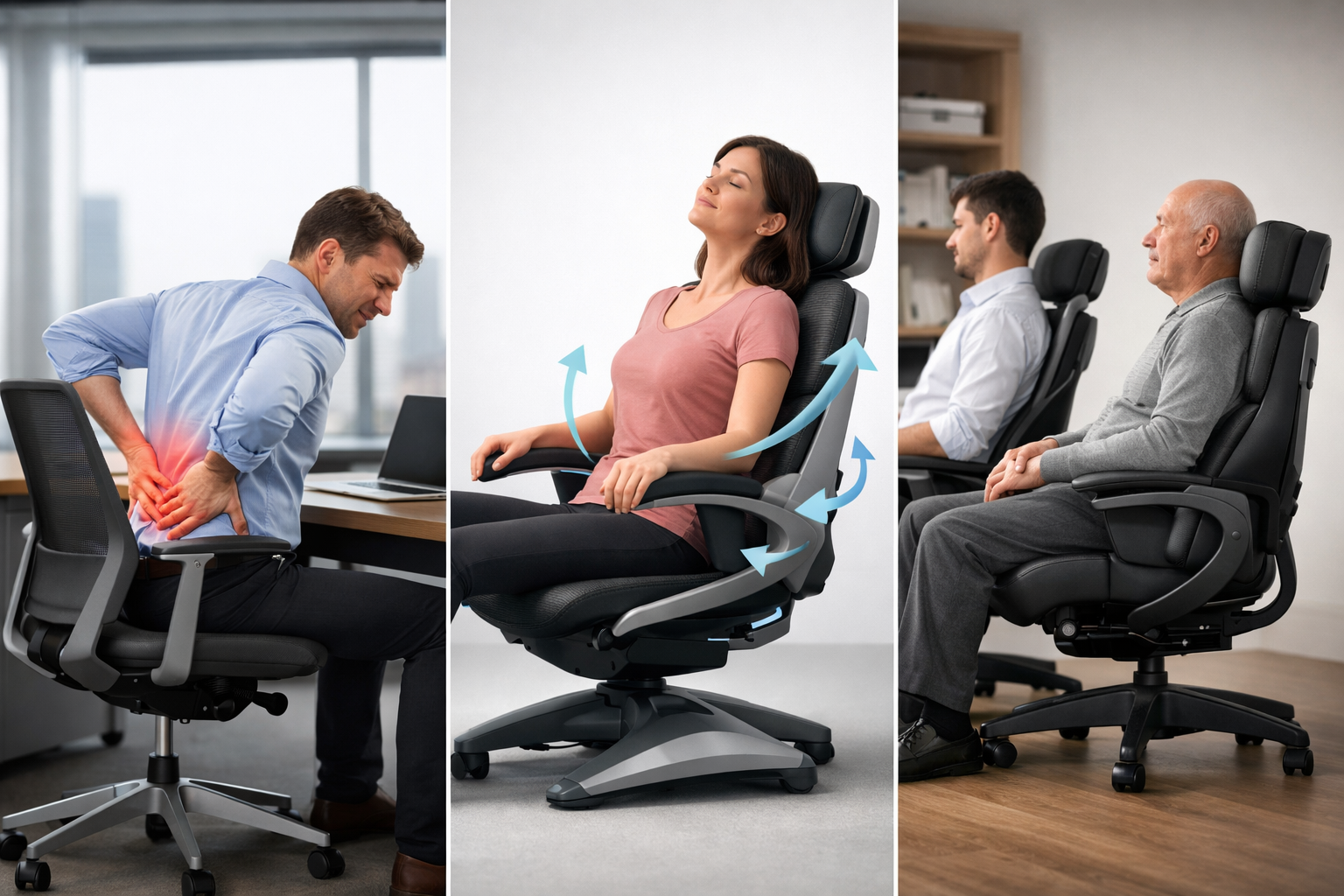
What if movement could come to the person instead?
A Chair That Helps the Body Move
Most people have seen massage chairs. They use pressure and vibration to relax muscles.
But the idea I’m imagining is slightly different.
Not a massage chair.
A movement chair.
A chair designed to create small, controlled micro-movements of the body during long periods of sitting.
Imagine a chair with adjustable support straps gently placed around the torso or waist.
Using a remote control, the chair could create very small guided movements such as:
• gentle torso rotation
• slight stretching of the lower back
• subtle shifting of posture
• controlled side movements
These movements would be slow, safe, and almost invisible — but enough to prevent the body from staying completely static.
It would feel less like massage and more like very light exercise while sitting.
Why Micro-Movement Matters
Our bodies are built for movement.
Even small shifts of posture can:
• improve circulation
• activate muscles
• reduce stiffness
• release pressure from the spine
A chair that introduces micro-movement cycles every few minutes could help people who must remain seated for long periods.
This could benefit many groups:
• office workers
• call center employees
• drivers
• programmers
• gamers
• people with restricted mobility
Even short, gentle movements repeated during the day might significantly reduce back pain and fatigue.
A Tool for Comfort – Not Laziness
The goal would not be replacing exercise or healthy habits.
Standing, stretching, and walking will always remain important.
But for people who cannot easily leave their chair during work, a movement chair could act as a supportive tool, helping the body avoid long periods of complete stillness.
Sometimes improving daily life does not require dramatic solutions.
Sometimes it only requires asking a simple question:
What small change could make a difficult routine easier?
Maybe This Idea Already Exists
Perhaps something similar already exists somewhere in the world.
Or perhaps it is waiting for an engineer or designer to develop it.
I personally cannot build such a device.
But I believe ideas sometimes travel further than the person who first thinks about them.
And if a simple chair could help reduce back pain for people who spend their days working while seated, that would already be a meaningful improvement.
One Idea Leads to Another
This idea is part of a small collection of concepts I document in what I call my Idea Lab.
Some of them are about technology.
Some are about work environments.
Some are about improving small aspects of everyday life.
If you enjoy exploring unusual ideas and possible solutions, you can find more of them here: